Making the case for intelligent automation
Recruiting qualified personnel is becoming increasingly challenging for physician practices, with staffing shortages contributing to a rise in medical errors.

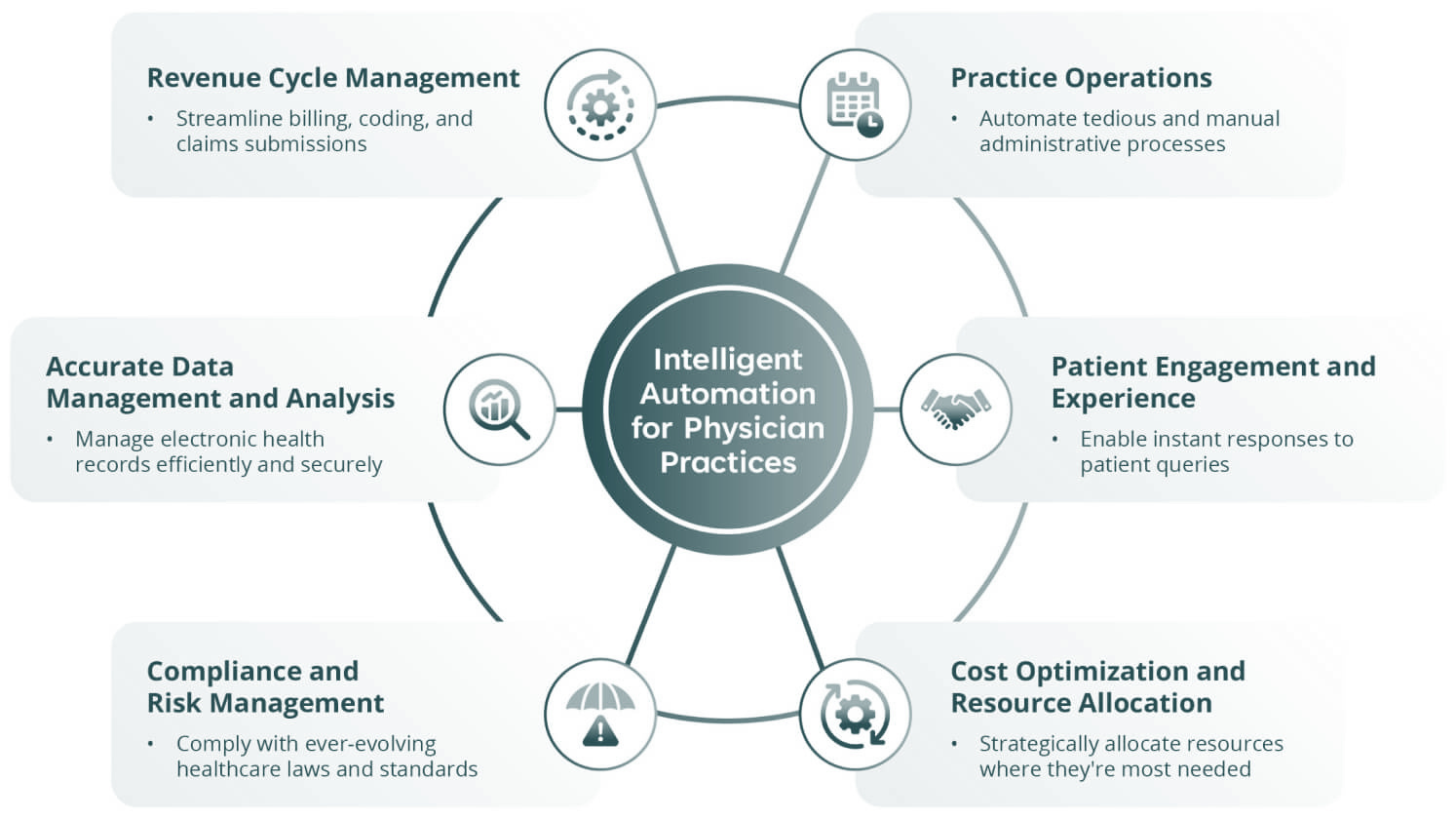
Today’s physician practices and specialty groups face many obstacles to efficiently delivering high-quality care. The administrative burden placed on healthcare providers continues to escalate, with increasing documentation requirements, complex billing processes, and regulatory compliance mandates consuming valuable time and resources.
Rising operational costs associated with maintaining facilities, purchasing medical equipment, and managing overhead expenses further compound healthcare organizations' financial challenges, particularly in the face of declining reimbursement rates and payment reforms.
Additionally, physician practices and specialty groups are contending with a need for more qualified healthcare professionals, including physicians, nurses, and allied health professionals, exacerbating workload pressures and straining existing staff members.
According to a Medical Group Management Association (MGMA) Stat Poll1 in late 2022, up to 73% of medical group practices reported recruitment of qualified personnel as the biggest challenges they faced. In a report by Survey Healthcare Global2, 34% of physicians surveyed said staffing shortages resulted in an increase in medical errors.
In an increasingly complex healthcare landscape, intelligent automation (IA) offers a compelling solution to these pressing challenges.
Discover how practices can now leverage automation technologies such as robotic process automation (RPA), artificial intelligence (AI), and machine learning (ML) to enhance efficiency, reduce costs, deliver high-quality care, and pretty much do better with less.