Introduction | Making the Case for Intelligent Automation
Today’s hospitals and health systems are navigating an increasingly complex landscape while striving to deliver high-quality, patient-centered care. The administrative burden placed on healthcare providers continues to escalate, chewing up vital time and resources.
Hospitals and health systems of all types are grappling with rising operational costs associated with maintaining facilities, purchasing medical equipment, and managing overhead expenses. These issues are further compounded by financial challenges, particularly in the face of declining reimbursement rates and payment reforms, putting pressure on healthcare organizations’ bottom lines.
The acute staffing shortages across the healthcare sector is also putting stress on the system. Physicians, nurses, and support staff are burdened with manual documentation while keeping up with patient care. Hospitals and health systems, including independent hospitals and regional health systems, regional academic medical centers, even specialty healthcare systems such as behavioral health, eye care, dental health, workers and other systems, face an increasingly complex healthcare landscape. Intelligent automation (IA) offers a compelling solution to these pressing challenges.
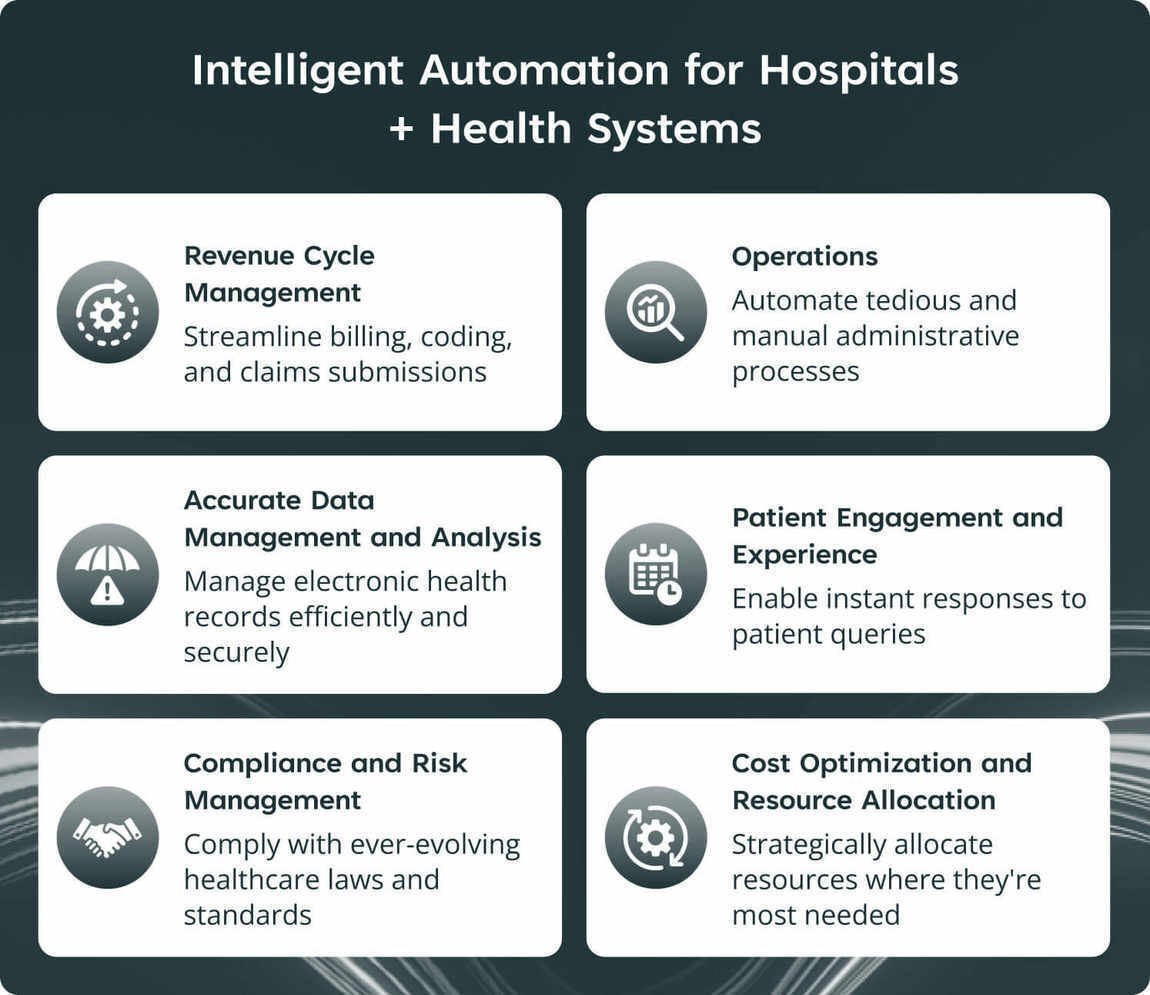
This eBook outlines how practices can now leverage automation technologies such as robotic process automation (RPA), artificial intelligence (AI), and machine learning (ML), to enhance efficiency, reduce costs, deliver high-quality care, and essentially do better with less.
Whether you are part of a major medical center, a regional health system, a specialty healthcare provider or an independent hospital, the opportunities to drive efficiency, cut costs, and improve patient care through automation are vast—and this guide will show you how to get started.
-1-1.jpeg)
-1-1.jpeg)
-1-1.jpeg?width=1494&height=686&name=image-infographic-04-desktop%20(1)-1-1.jpeg)

-2.webp)