Why Banks Must Evolve to Meet Modern Demands
The banking and financial services industry is rapidly evolving, driven by new technology and shifting customer expectations. While retail banking has seen massive digitization efforts, the same cannot be said of commercial banking.
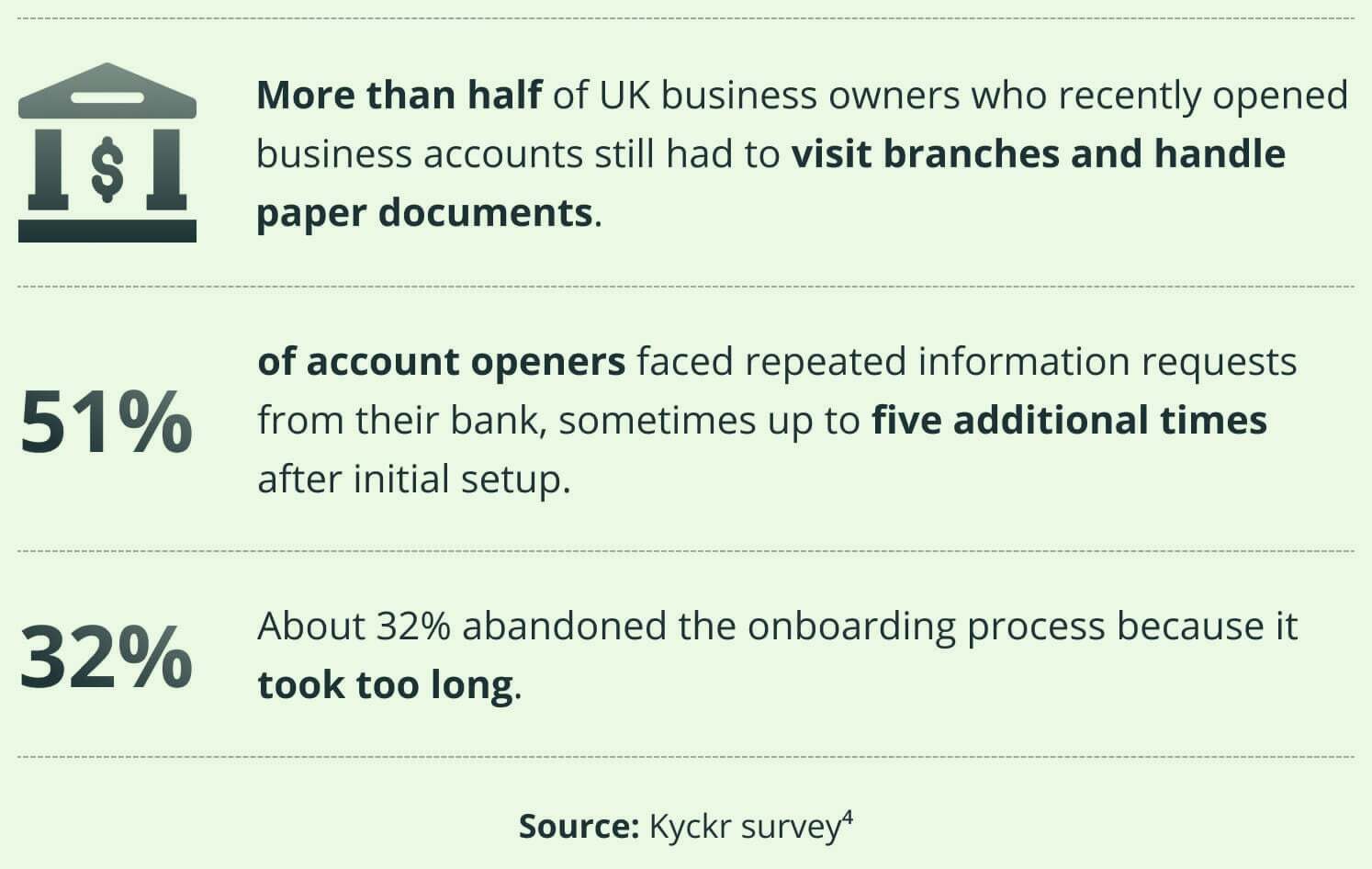
Many banks still lag behind in meeting the needs of modern business owners who want digital access to banking products and services. This gap means enterprise customers have to deal with traditional, time-consuming banking processes that frequently require in-person meetings during business hours.
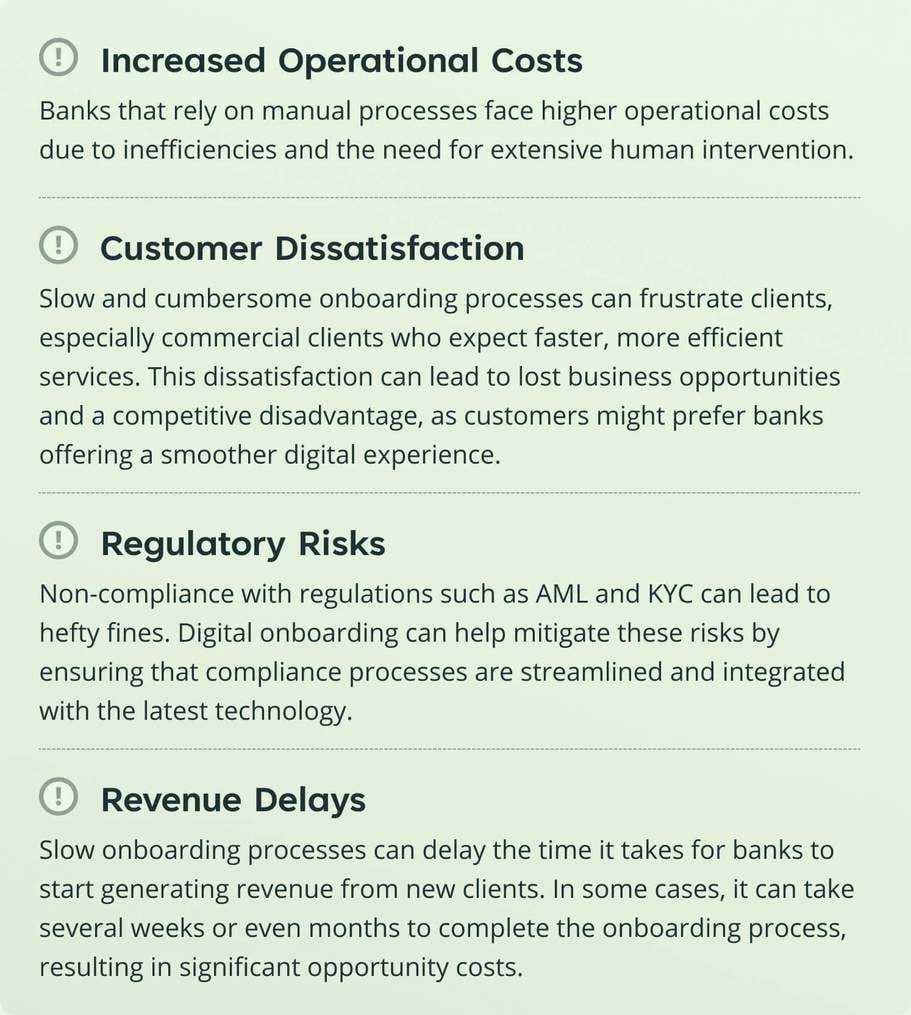
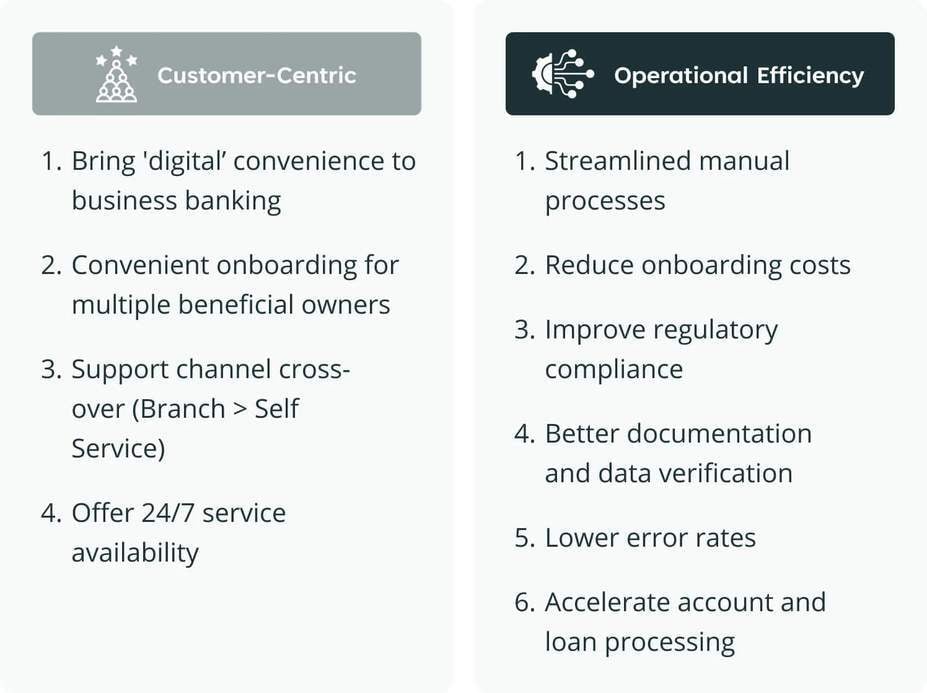
Banks can offer time-strapped enterprise owners convenience and a better customer experience with digital commercial onboarding. Today’s business owners, especially the younger, more tech-savvy generation, have grown accustomed to the seamless digital experiences offered in personal banking and other industries. They’re used to immediacy of service, whether it’s making a purchase online, managing their finances through an app, or ordering lunch on their phone. They expect the same level of ease when managing their company finances but often find themselves trapped in outdated, frustrating processes reminiscent of the 1990s.
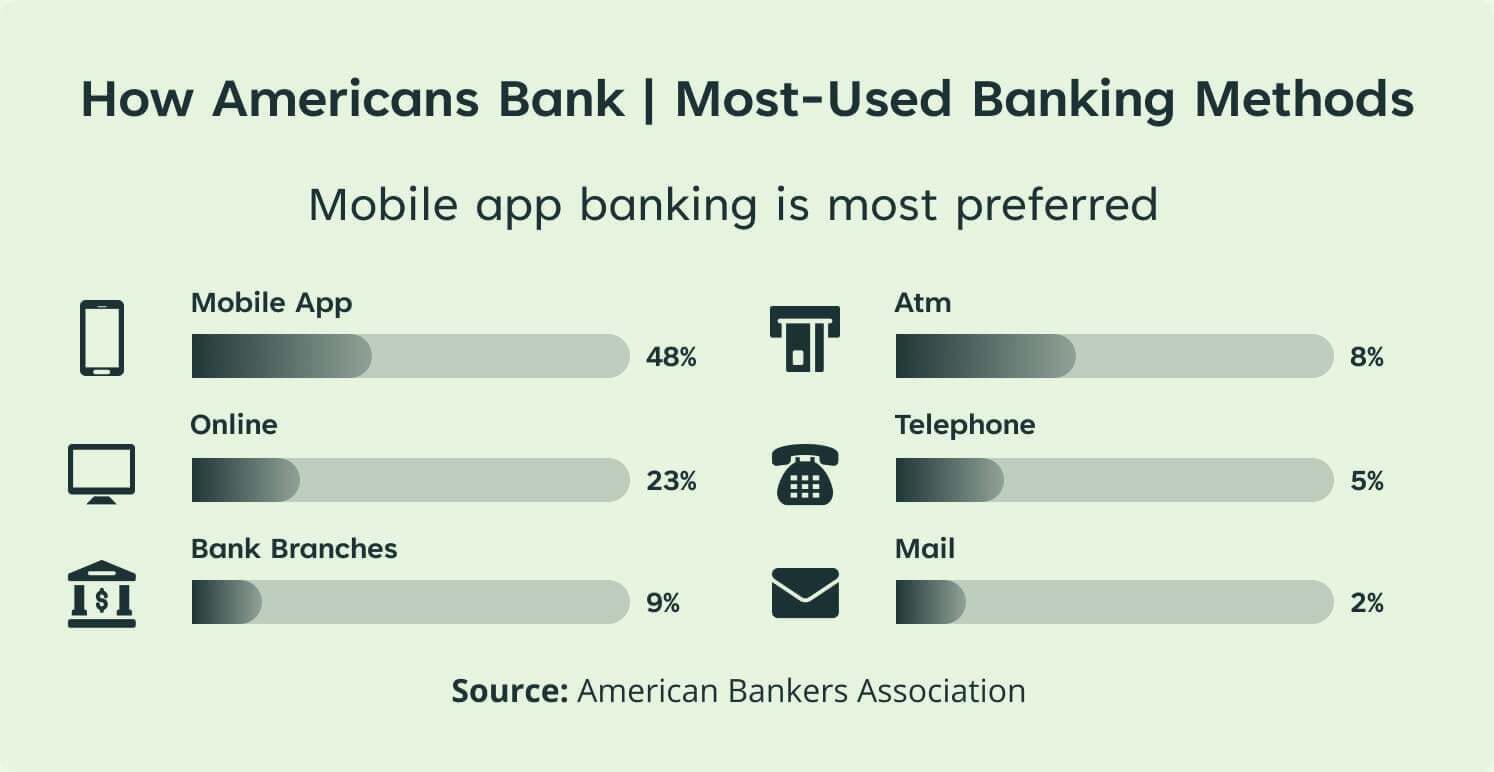
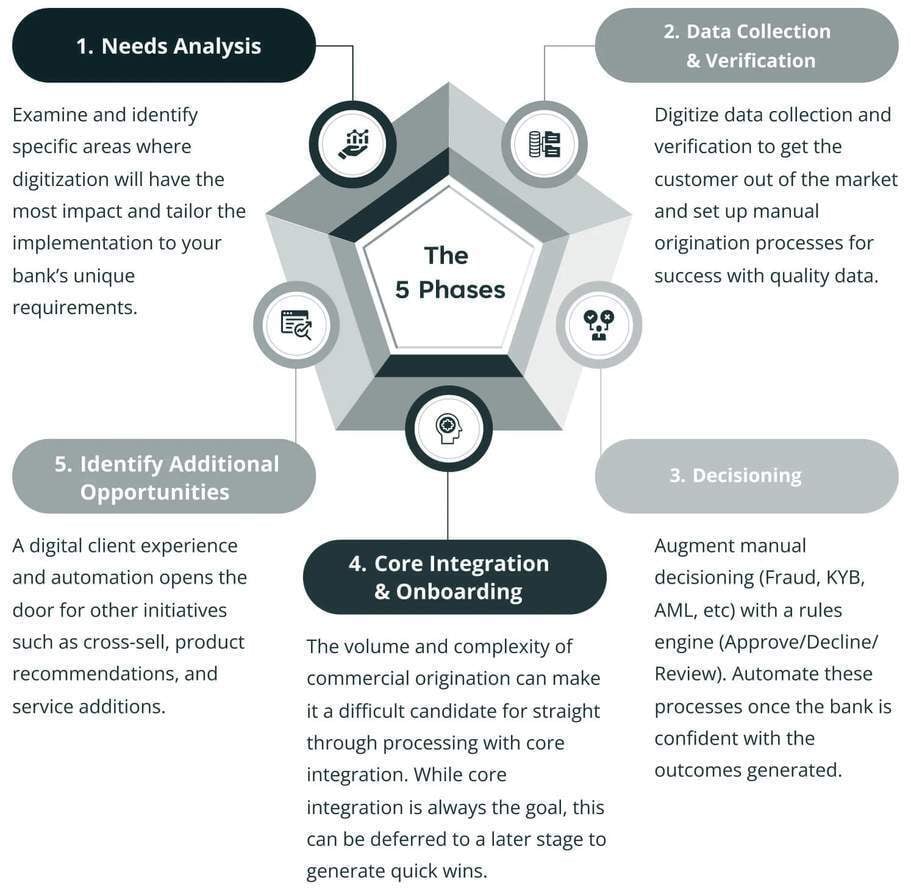
So, what’s holding banks back from transitioning to digital onboarding and offering much desired accessibility and convenience? Many institutions struggle with deploying digital solutions as they can be rigid and misaligned with their desired approach to commercial client engagement.
Furthermore, commercial onboarding is a complex process involving multiple stakeholders, extensive documentation, and complex product needs. As such, the prevailing view is that it is just too complicated for digital self-service. There’s also the belief that business banking requires a high-touch, relationship manager-led approach. For others, past digitization efforts have led to costly failures, contributing to a reluctance to invest in new solutions.
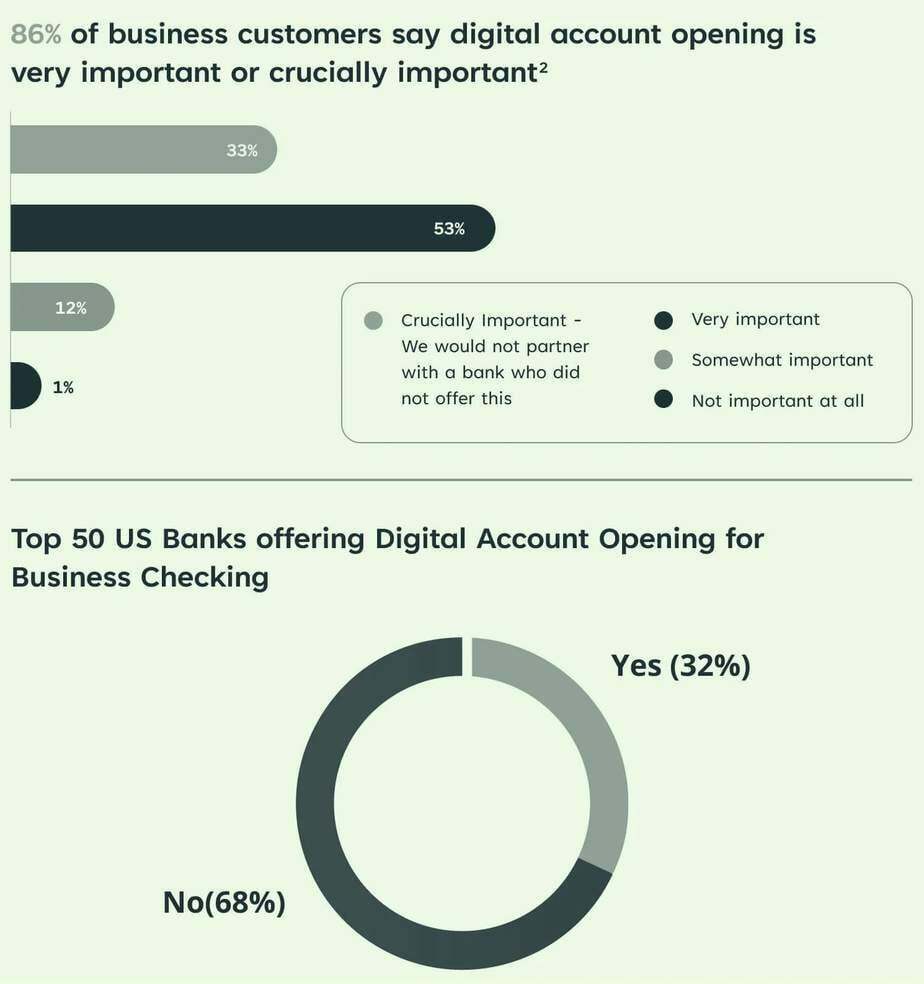
Research completed by Myridius